

Is your dog actually happy? Looking Beyond Drop-Off
One of the most common things dog owners say is, “My dog runs right in, so they must love it.”
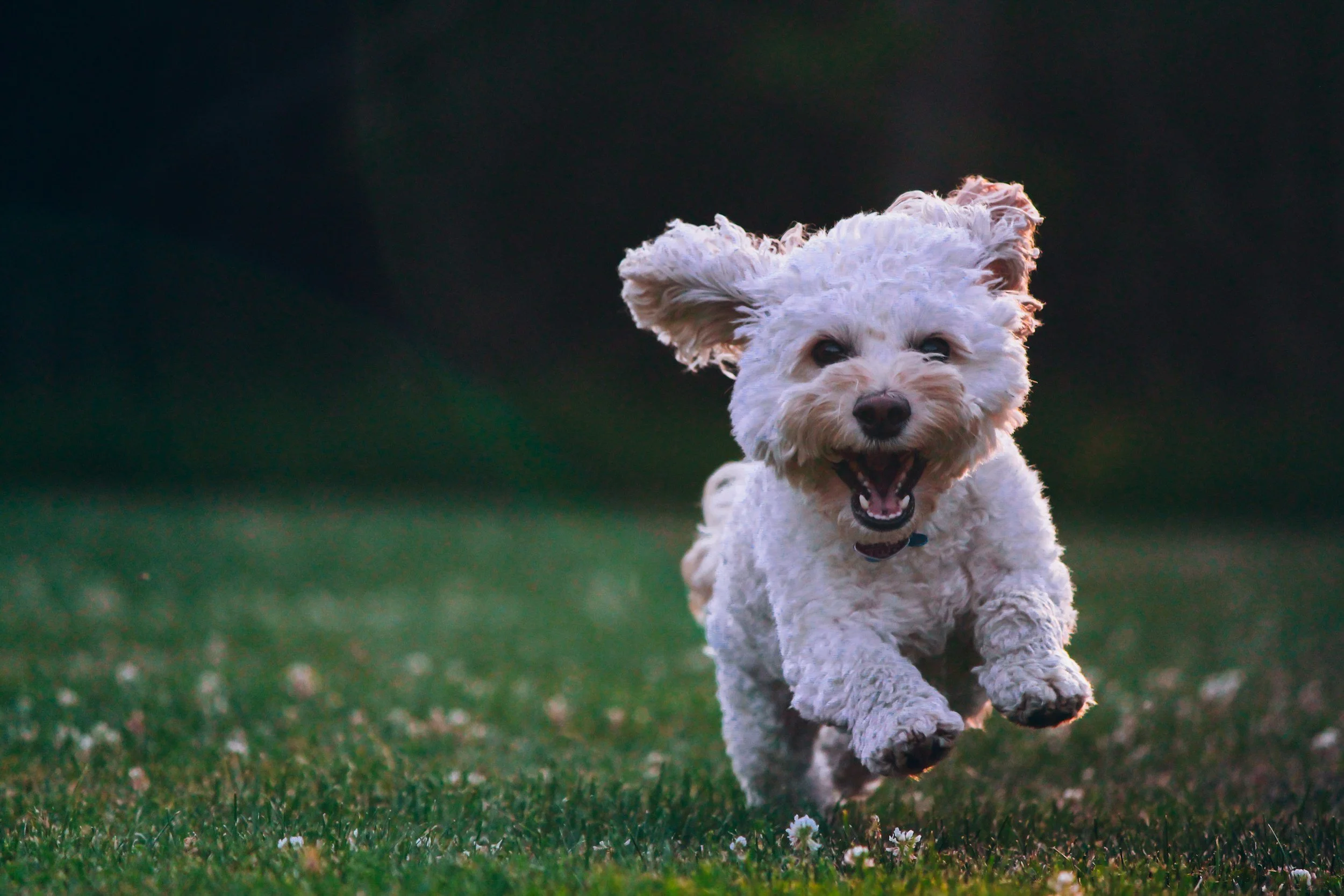
A “happy” dog?
And sometimes that may be true.
But a dog’s eagerness to enter a building, hop into a car, greet a handler, or rush toward a familiar routine does not always tell the full story. Dogs can appear excited to arrive somewhere and still leave that experience feeling overwhelmed, overstimulated, or emotionally unsettled.
This can happen in many different settings, including dog parks, daycares, home-based daycare, group hikes, private training, pet sitting, grooming, the veterinary office, and boarding facilities. The setting itself does not automatically tell us whether a dog is comfortable. What matters is how that individual dog is actually coping with the experience before, during, and after.
Excitement does not mean comfort, happiness or safety
Dogs are extremely good at forming associations. They learn that certain places, people, vehicles, and routines predict activity, stimulation, attention, social interaction, or simply a change in the day.
Because of that, a dog may look thrilled to arrive somewhere for many different reasons. They may recognize the place. They may know familiar people are there. They may be anticipating activity. They may just be excited that something is happening.
Anticipation is not the same thing as emotional comfort.
A dog who is pulling, spinning, barking, jumping, whining, or wagging may be showing big feelings. Those feelings are not always positive. High arousal can look a lot like happiness to the human eye, even when the dog is actually feeling stress, uncertainty, frustration, or emotional overload.
Sometimes anxiety looks a lot like “yay.”
Familiar does not always mean enjoyable
Dogs can also be happy to approach something familiar even when part of the experience is unpleasant or difficult for them.
A dog may jump into the car even if they get carsick.
or happily greet the veterinary staff while still disliking the exam.
Or rush into training or grooming because they know the people, routine, and likely food/toys, while still finding parts of the experience stressful.
A dog may be excited to arrive at daycare, boarding, a group hike, or a home-based care setting because they recognize the environment, even if they are not truly coping well once the owner leaves.
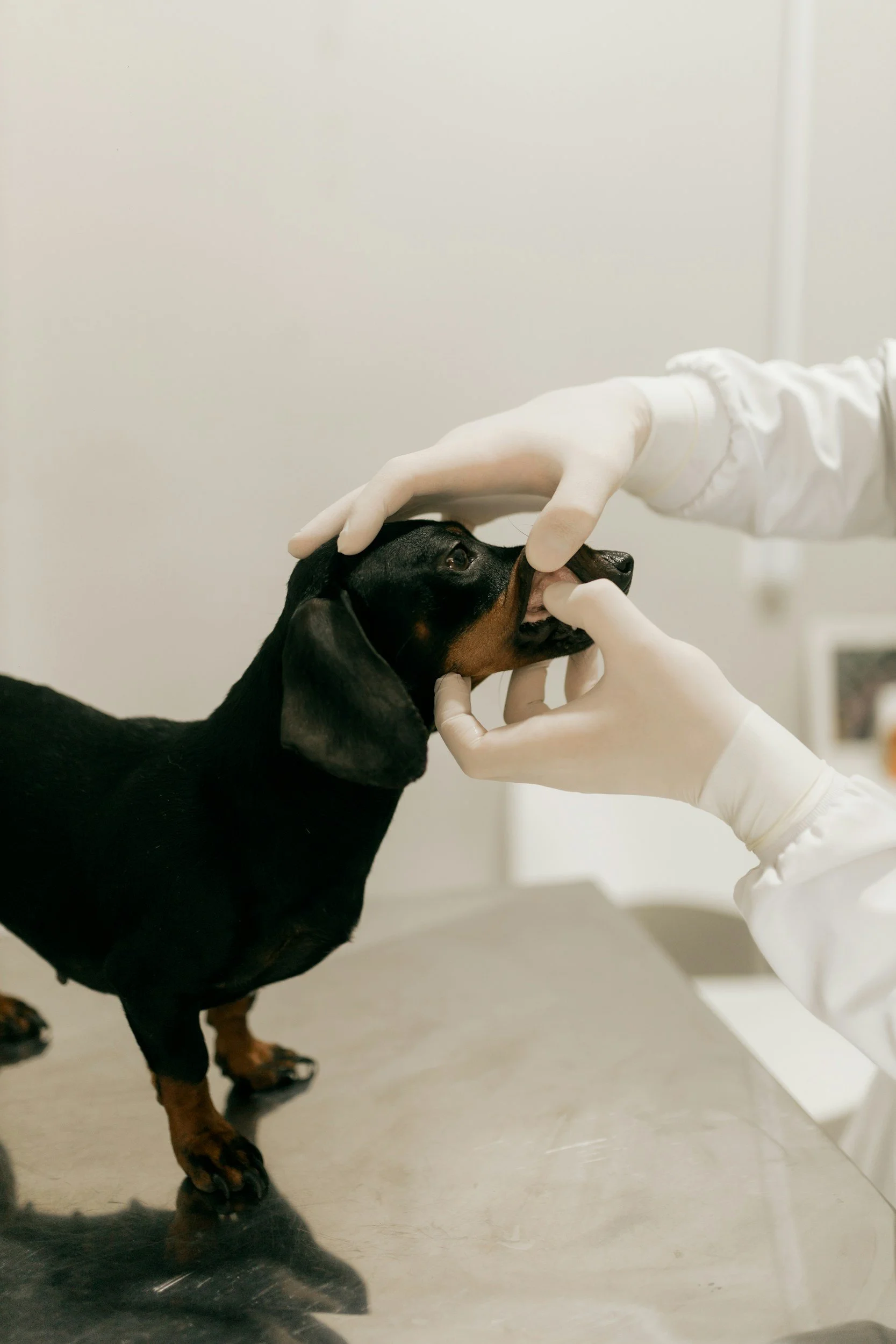
Does handling at the vet make your dog happy? Lots of social dogs enjoy meeting the staff, until the exam starts.
This is why the drop-off moment alone is never enough to tell the whole story.
People often look for simple signs that a dog is “happy.” Tail wagging is probably the most common example. But a wagging tail only tells us that the dog is showing some emotion. It does not tell us whether that emotion is relaxed and positive or tense and conflicted.
The same is true for panting, licking, frantic energy, bouncing, vocalizing, and constant motion. These behaviors can appear cheerful on the surface while actually reflecting stress or overstimulation.
That does not mean every excited dog is unhappy. It means we need to look at the whole dog, not just one behavior.
This can happen in any dog care setting. It is important to make it clear that this issue is not limited to a single style of care. A dog can struggle in a small, quiet environment just as easily as in a busy one if the fit is wrong.
Every setting has strengths and challenges.
A home-based daycare may feel calmer and more personal, but that does not automatically make it the right fit for every dog.
A larger-scale daycare may be an affordable option to get your dog out of the house during the day, but they are often loud, hectic, and a sensory overload.
A group hike may sound enriching, but not every dog is comfortable moving in a social pack.
A boarding facility may be clean, caring, and well-run, and still be emotionally difficult for a particular dog.
Private training can be helpful and educational, but some dogs may still find the process stressful.
Even the vet, your dog's grooming salon, or a trusted pet sitter can create mixed emotions in dogs, depending on the dog’s history, temperament, and coping style.
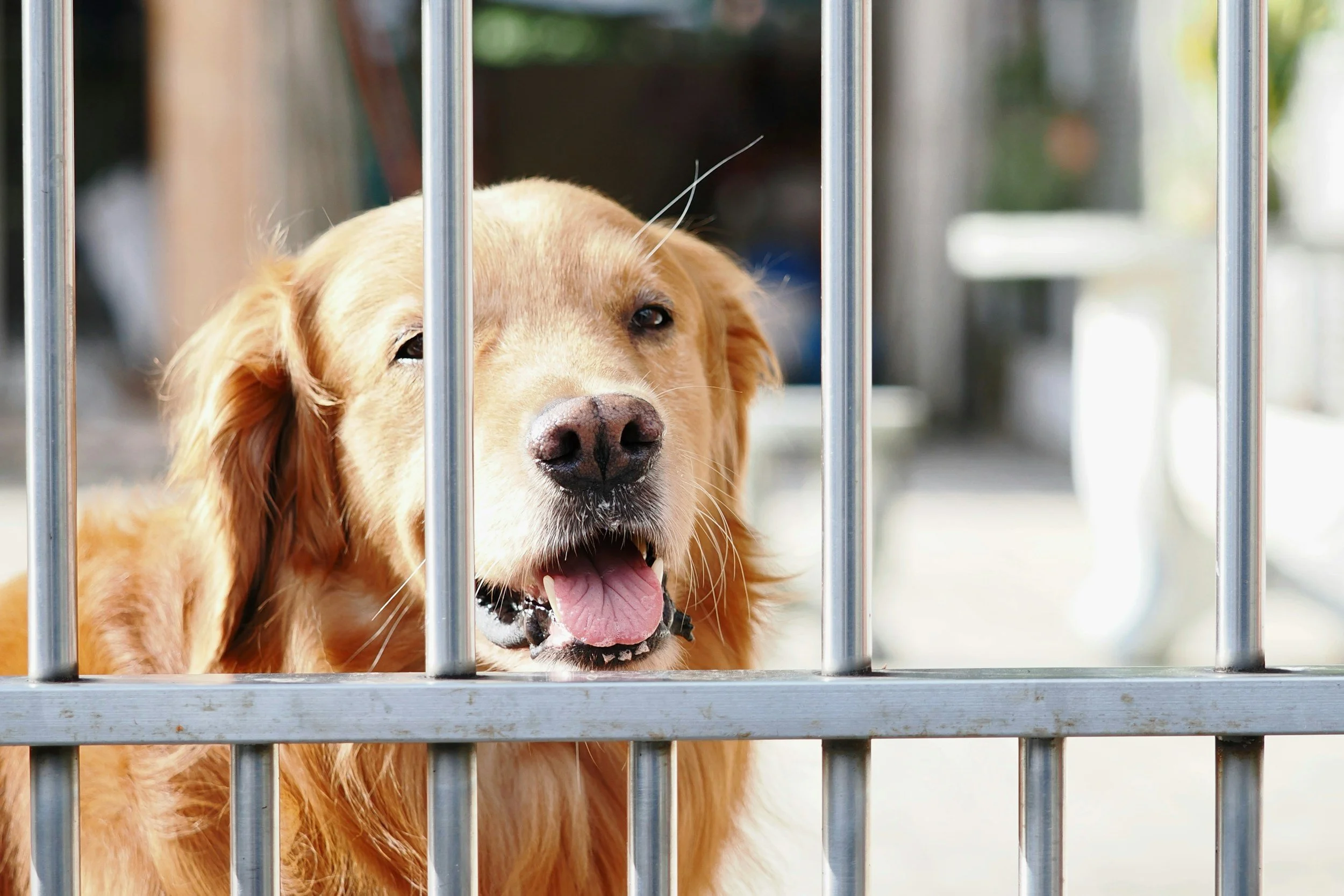
Whats the dogs face say to you?
The point is not that one format is bad and another is good. The point is that a dog can appear eager to go into many different environments where they are actually struggling once the experience fully begins
What matters most is what happens afterward.
The question should not only be, “Was my dog excited to go in?”
The better questions are:
How does my dog look at pickup?
How do they behave once they get home?
Can they settle normally?
Do they seem clingier, noisier, more reactive, or more restless afterward?
Do they pace, pant, whine, or seem unable to relax?
Do they hide?
Do they seem out of sorts for the rest of the day or even the next day?
Those after-effects often tell us much more than the drop-off ever will.
A dog who is thriving in an environment usually shows an ability to recover well from it. A dog who is struggling often shows us later, once the adrenaline wears off and the experience is over.
Why environment and handling still matter
While any environment can be the wrong fit for an individual dog, some conditions do make it harder for dogs to cope well.
Many dogs struggle more in environments that are overly busy, inconsistent, poorly structured, short-staffed, frequently changing, or unclear from day to day. Dogs often do best when routines are predictable, groups are managed thoughtfully, and the humans involved understand how to read stress, arousal, avoidance, social pressure, and shutdown. More importantly, it's the caregiver's duty to articulate and explain the behavior they see as honestly and plainly as possible to the owners, even if that means losing that client.
It is also worth saying that many people who work with dogs genuinely love them. They may be caring and kind, doing their best. But loving dogs and understanding dog behavior are not the same thing. Reading what a dog is communicating takes observation, education, experience, and humility, not just owning a house pet.
A dog can look “fine” to the untrained eye and still be telling a very different story.
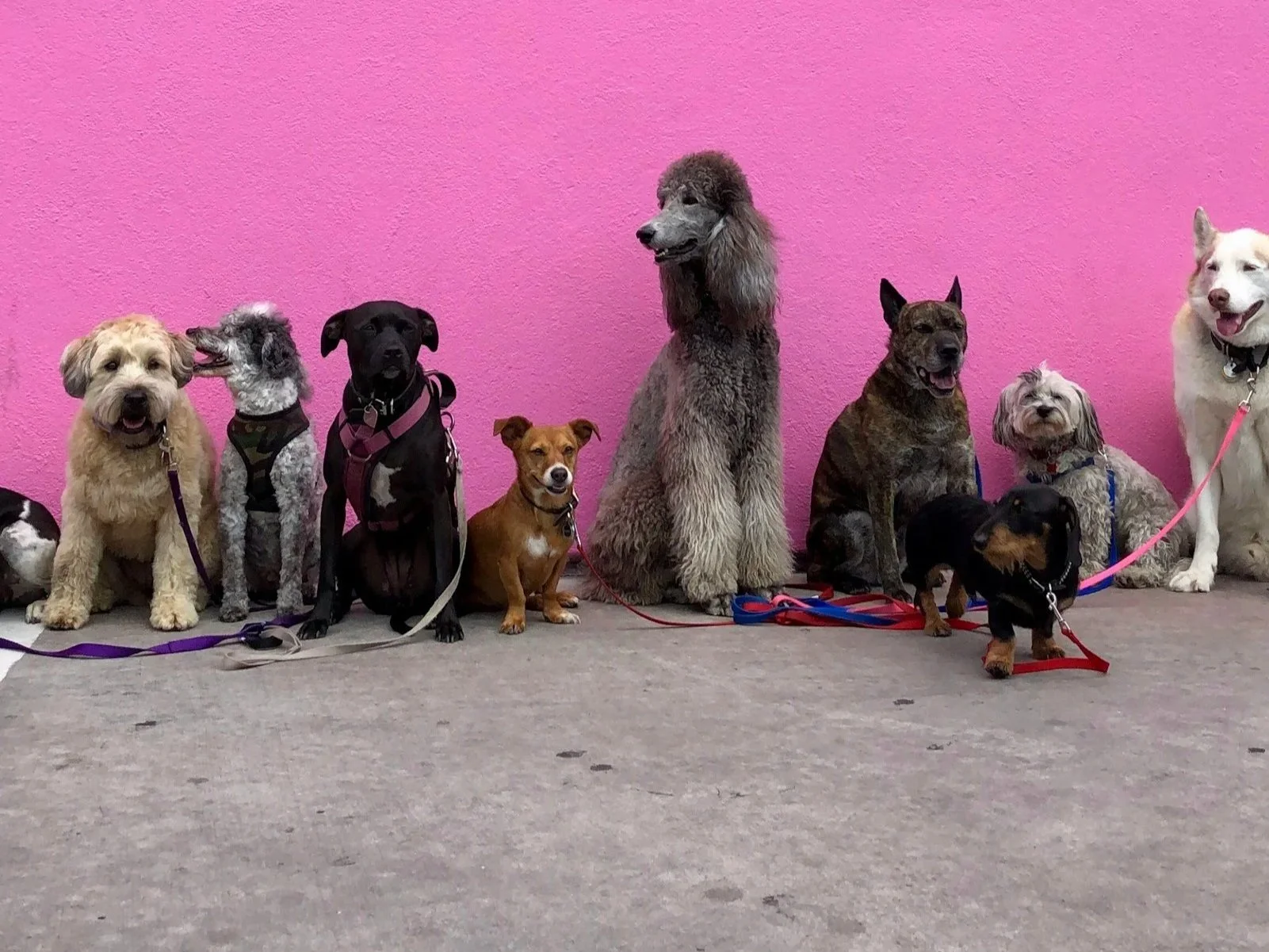
What do you see here?
Not every social dog is suited for every social setting. This is one of the most important things dog owners can understand, even if that means changing your own hopes and expectations.
Not every friendly dog enjoys dog parks. Some may age out of experiences they once handled well.
Not every playful dog is a daycare dog. Some dogs do best in a small, quiet setting.
Not every outgoing dog enjoys group hikes. Some do better with one-on-one walks.
Not every dog who tolerates a situation is actually comfortable in it. Some may enjoy a certain kind of care only in moderation.
Not all dogs are social; some like interacting with groups. Some enjoy structured training but not group play.
Not all easygoing dogs can handle a change in routine, such as a boarding facility. Some are happiest with an individual pet sitting at home.
Let's repeat that again: Not every dog is suited for every kind of care.
Knowing your dog and adjusting to your dog's needs is the most important step to having a happy, healthy, content dog.

Protect your dog.
The goal is not to force a dog into the most social, stimulating, or popular option. The goal is to find the environment where that dog can genuinely feel safe, successful, and emotionally balanced.
A dog rushing into a building, home, van, park, class, clinic, or group activity may be showing anticipation. It may be excitement. It may be stimulation. It may be stress. What it does not automatically tell us is that the dog is fully comfortable or truly enjoying the full experience.
That is why it is so important to look at the complete picture before, during, and after. A dog’s behavior after the event often tells the real story. When a dog seems excited to arrive but comes home anxious, overstimulated, unable to settle, clingy, reactive, or shut down, that deserves attention. Dogs do not need us to assume they are happy because the surface looked cheerful. They need us to pay attention to the full picture.
Because the most important question is not whether a dog runs in happily. It is whether they come home feeling safe, comfortable, and okay.
