

Is daycare a good idea for my dog?
Does Your Dog Truly Benefit from traditional Daycare?
At Blue Dingo Consulting, we believe that the environment your dog is in directly impacts their behavior, safety, and long term well being. While many owners look to traditional dog daycare for socialization, the reality is that the standard high volume model is rarely a fit for most dogs. In fact, if your dog is already dealing with behavioral issues, a chaotic environment can make their problems significantly worse.
Before we explore the solution, it is vital to understand why traditional, "warehousing" style daycare often fails our dogs, and how Massachusetts is finally taking steps to address these massive safety gaps through Ollie's Law. Daycare can be an option for young, higher-energy, hyper-social dogs, it’s rarely a good fit for most dogs long-term. If your dog is anxious, sensitive to sounds, avoidant of handling, aggressive to other animals/people, or has other behavioral issues like leash reactivity, scavenging, or crate issues, daycare can actually make their problems worse.
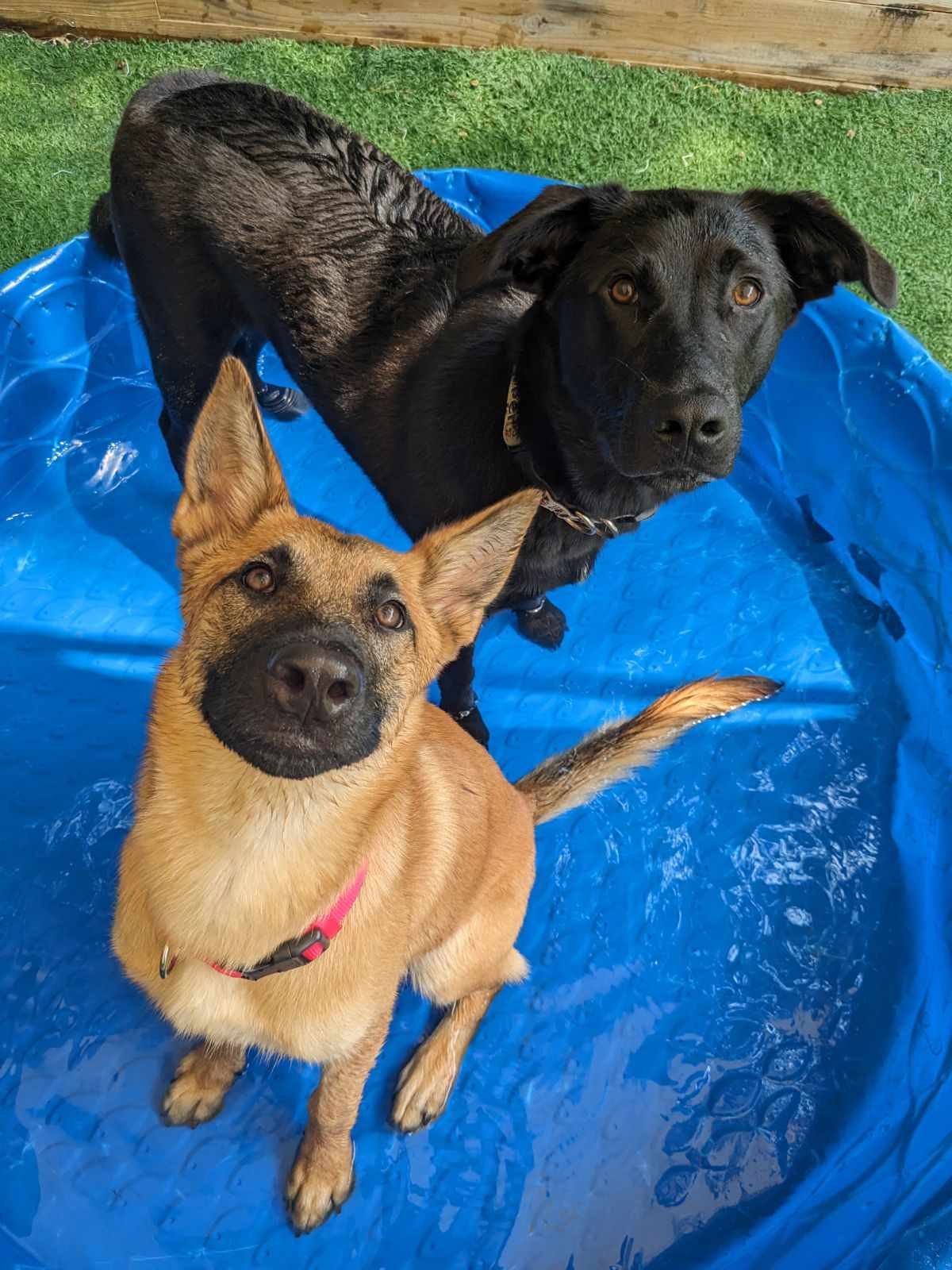
Two herding breed mixes teenagers enjoying a pool!
The Reality of Daycare
The main problem with standard daycares is the lack of structure, professional knowledge, and appropriate ratios. Many of these businesses operate with the primary goal of maximizing profit, prioritizing high numbers over the safety and emotional needs of the animals or the staff. This model is often little more than warehousing, where dogs are essentially left to entertain themselves with minimal skilled supervision. Often daycare workers are young and love the idea of working with dogs but the reality of managing a group of dogs is more work for minimum wage than they signed up for.
With the average daycare price being $30-45 its easy to see how most places need to keep the number of dogs high with the staff cost low to cover insurance, overhead, supplies, utilities, repairs, and all the other expenses. Often this leads to dogs in very large groups of 20+ dogs with one underpaid and under trained employee or equally problematic the dogs spend excessive amounts of time crated and kenneled instead. Its quite common for these daycares to use bark collars to keep dogs quiet, spray bottles to stop behavior, air horns, bull horns, cold water hoses, and loud yelling to manage the groups as best as they are able. Doesnt sound like anywhere I’d like to be.
Until very recently, Massachusetts had no state level regulations for the dog daycare and boarding industry, leaving individual municipalities to handle licensing with zero uniform safety standards.
Introducing Ollie's Law: A Historic Step for Dog Safety in MA
A historic shift occurred on December 19, 2024, when Massachusetts officially enacted "Ollie's Law" (An Act to Increase Kennel Safety). This legislation was named in honor of Ollie, a puppy who tragically lost his life after being mauled in an unstructured “warehouse” style daycare facility. This new law empowers the Massachusetts Department of Agricultural Resources (MDAR) to establish the state's first uniform safety standards for all commercial boarding and daycare facilities.
Ollie's Law addresses the exact issues inherent in the warehousing model by establishing critical minimum standards, including:
Mandatory Staff to Dog Ratios: MDAR is now required to set reasonable rules regarding the number of staff members needed to properly supervise a group. (Currently, standard facilities often operate with dangerously inadequate ratios of one untrained person managing 20 or even 30+ dogs.)
Required Training for Staff: Establishing standards for proper education, training, and knowledge of dog behavior and body language for all facility employees.
Mandatory Injury Reporting: Facilities are now legally required to report all injuries to animals or people to the local licensing authority, providing crucial transparency and accountability.
While these state wide regulations are still being finalized (with full implementation expected by 2026), Ollie's Law validates the pillars that Blue Dingo Consulting has always prioritized. We have always pushed for a 10 dogs to one human and never had only one person alone. We paid for and encouraged our employees to get continuing education through Fear Free pets. We had an excellent relationship with our ACO which made addressing any issues exceptioanlly easy even though they were exceedingly rare.
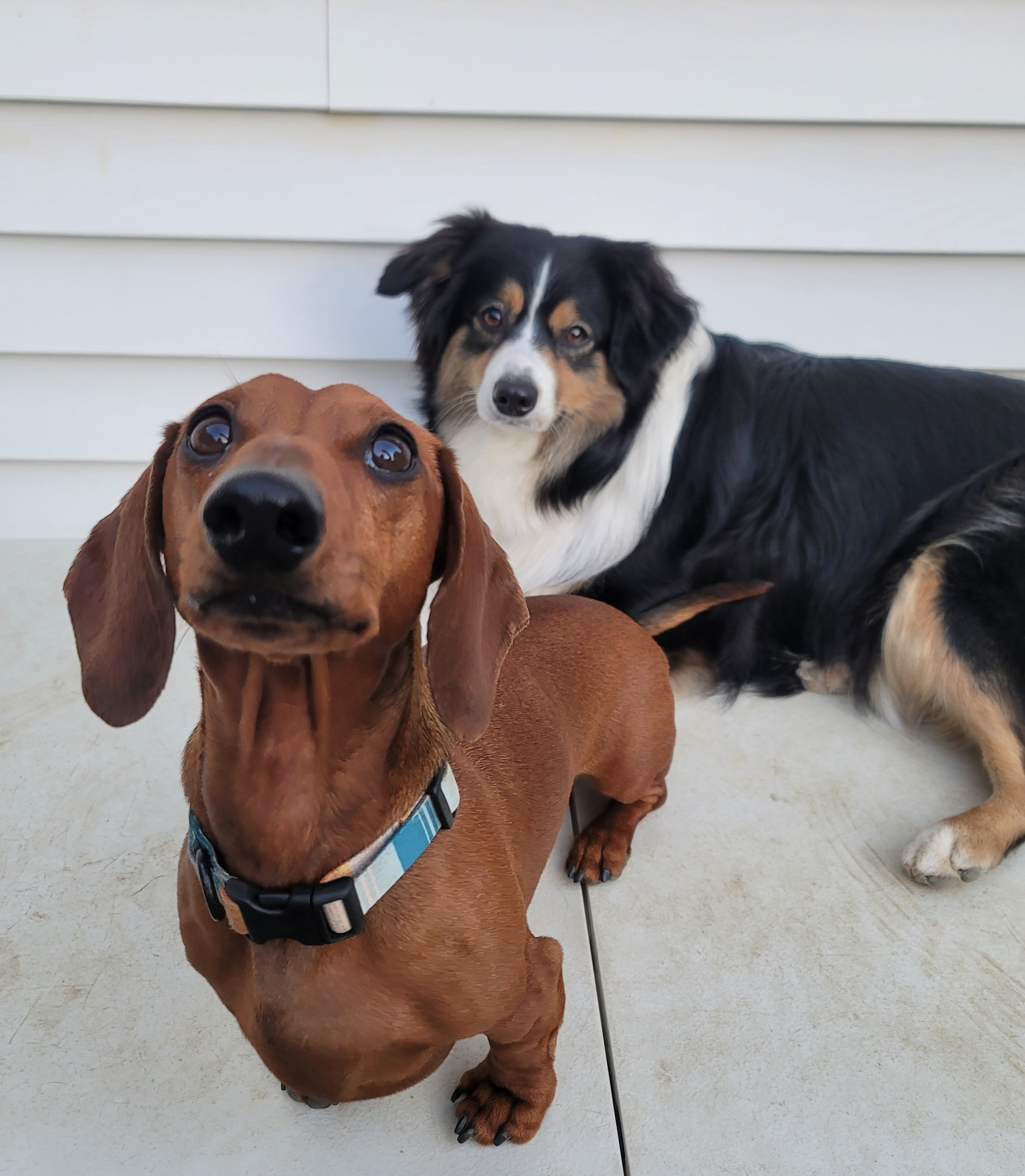
A doxie and a MAS
Dogs Who May Struggle
Even with great cleaning protocols, any high density environment can be a breeding ground for illness. Dogs that are not fully vaccinated, have medical conditions like bad knees, hips, or heart issues, or have weak immune systems should avoid daycare. Beyond health, this model is particularly inappropriate for the following behavioral profiles.
Here are some reasons why daycare may not be appropriate for some dogs:
High Anxiety/Nervous:
Some dogs may be anxious or nervous in new environments or around unfamiliar dogs. Being in a daycare environment can be overwhelming for even the most social dogs. While some dogs may warm up and enjoy daycare, many do not and instead shut down, avoiding other dogs and people during their day. An anxious dog will go home tired because of the energy spent being anxious and avoiding conflict.
Dog daycare can be compared to a busy nightclub or bar. Just like how some introverts may struggle in a noisy and crowded social setting, anxious dogs may also struggle in a chaotic and busy environment with unfamiliar dogs. For an introvert, being in a loud and crowded nightclub or bar can be overwhelming and cause anxiety. They may feel uncomfortable and out of place, and it may take them time to warm up to the environment and the people around them. Some dogs never warm up to a daycare environment, but because they aren't causing issues, the owners are never informed.
Just as an introvert may prefer quieter and more intimate social settings, an anxious dog may benefit from smaller and more controlled socialization opportunities, such as one-on-one playdates or training classes. It's important to understand that every individual, whether human or dog, has unique needs and preferences. While some may thrive in a busy and chaotic environment, others may find it overwhelming and stressful. As responsible dog owners, it's our job to recognize our dog's individual needs and provide them with appropriate socialization opportunities that are safe and comfortable for them.
Dogs who enjoy rough play or play to hard with others:
Dogs play in a variety of ways from gentle games of chase, to open-mouth bitey games, to wrestling and very hard roughhousing. While every dog is an individual dogs who play excessively rough are not good candidates for daycare.
Dogs who play too rough or who enjoy rough physical play may not be good candidates for dog daycare. While play is an important part of a dog's socialization and development, excessive rough play can be dangerous and lead to injury. Dogs who enjoy rough play often do not understand when they are being too rough and ignore important social cues from others. This type of play can quickly escalate and become dangerous, especially in a group setting where there are groups of dogs playing together. Rough play can lead to injuries such as bites, scratches, and bruises, and can also cause emotional distress in dogs that are more timid or fearful. Even with proper supervision, dogs that play too rough can pose a risk to other dogs and staff members. Many daycares do not have staff equipped to manage groups or stop fights, always ask how big the groups are, how they manage the groups, and what their protocols are for a fight/ injury.
If your dog enjoys rough play, it may be more appropriate to provide them with one-on-one playtime with you or playdates with other dogs that enjoy similar play styles.
Aggression/Reactivity:
Dogs that are aggressive towards other dogs, people, who are barrier reactive, or leash reactive are often not a good fit for daycare. Daycare is not an appropriate way to socialize aggressive or reactive dogs as they pose a risk to other dogs and staff members. Dogs with a history of aggression or aggressive behaviors toward dogs who are smaller/larger, of the same gender, unfamiliar dogs, or toward household dogs are not appropriate candidates for daycare. We will dismiss any dog showing aggressive behaviors toward another dog or staff member.
Health concerns:
Dogs that have medical conditions (bad knees/bad hips/heart conditions), are not fully vaccinated, or have weak immune systems should avoid daycare. Even with the most strict cleaning protocols daycare environments can be breeding grounds for illnesses, and dogs that are not in good health may be more susceptible to contracting these illnesses.
Size:
Larger and extra large breeds can be absoloutely wonderful in a daycare but its important to remember dogs are animals and they do not always act in ways we anticipate. Caution should be shown for extra large and extra small breeds. We reserve the right to turn away dogs we believe are to small or too large.
Breed-specific behaviors:
Not all dog breeds are suitable for daycare, as each breed has unique characteristics, energy levels, and temperaments that may not be compatible with a daycare environment. It is important to consider the original purpose of your dog’s breed when deciding if daycare is a good fit. In general, working breeds (like Great Danes/ Boxers/ Great Pyrenees), herding breeds (Border Collies/ German Shepherd/ Cattle Dogs), terriers (Bull terrier/ Wheaten terrier/ Staffies), sighthounds (greyhound/ whippet), and toy breeds (Italian greyhound/ Chihiuaua/ Pug) struggle in a traditional daycare setting. For example:
Herding breeds are meant to move livestock, making them generally energetic, often intolerant of other dogs in their space, and with nippy play styles that can be problematic in a daycare setting.
Livestock breeds may believe the daycare is their property to protect from outsiders, causing challenges with new dogs and new employees. Per their original job, they are bred to protect their property/livestock and not back down from a challenge.
Brachycephalic (short-nosed) breeds can struggle with breathing and overheating. These breeds may not be able to tolerate the physical exertion and heat of a daycare environment.
Some breeds, such as sighthounds, may also have a higher prey drive or a tendency to be intolerant of other dogs, which can pose a risk to other dogs and staff members in a daycare setting.
Small and extra-small breed dogs can be hurt by larger dogs, regress in house training, and learn the snappy/grumbly/barky habits common in small dogs whose needs are ignored or not met.
It's important to note that individual dogs within a breed can also have unique personalities and temperaments that may not be suitable for daycare.
Isn’t daycare for socialization?
Yes, but mostly no.
While daycare can provide some socialization opportunities, dogs need to be properly socialized in a variety of environments and with a variety of people and other animals. It's important to note that daycare should not be a replacement for properly structured socialization. The goal of most daycares is to make as much money as possible, without considering the dogs' or employees' needs or safety. There is no industry standard for education or training of daycare staff; it's often a free-for-all. Many dogs learn habits in daycare that are less than ideal, like humping when overstimulated, scavenging when bored/overwhelmed, avoiding being grabbed by humans/ keep away, collar slipping, crate/confinement issues, resource guarding, leash reactivity, poop eating, jumping on people, and more.
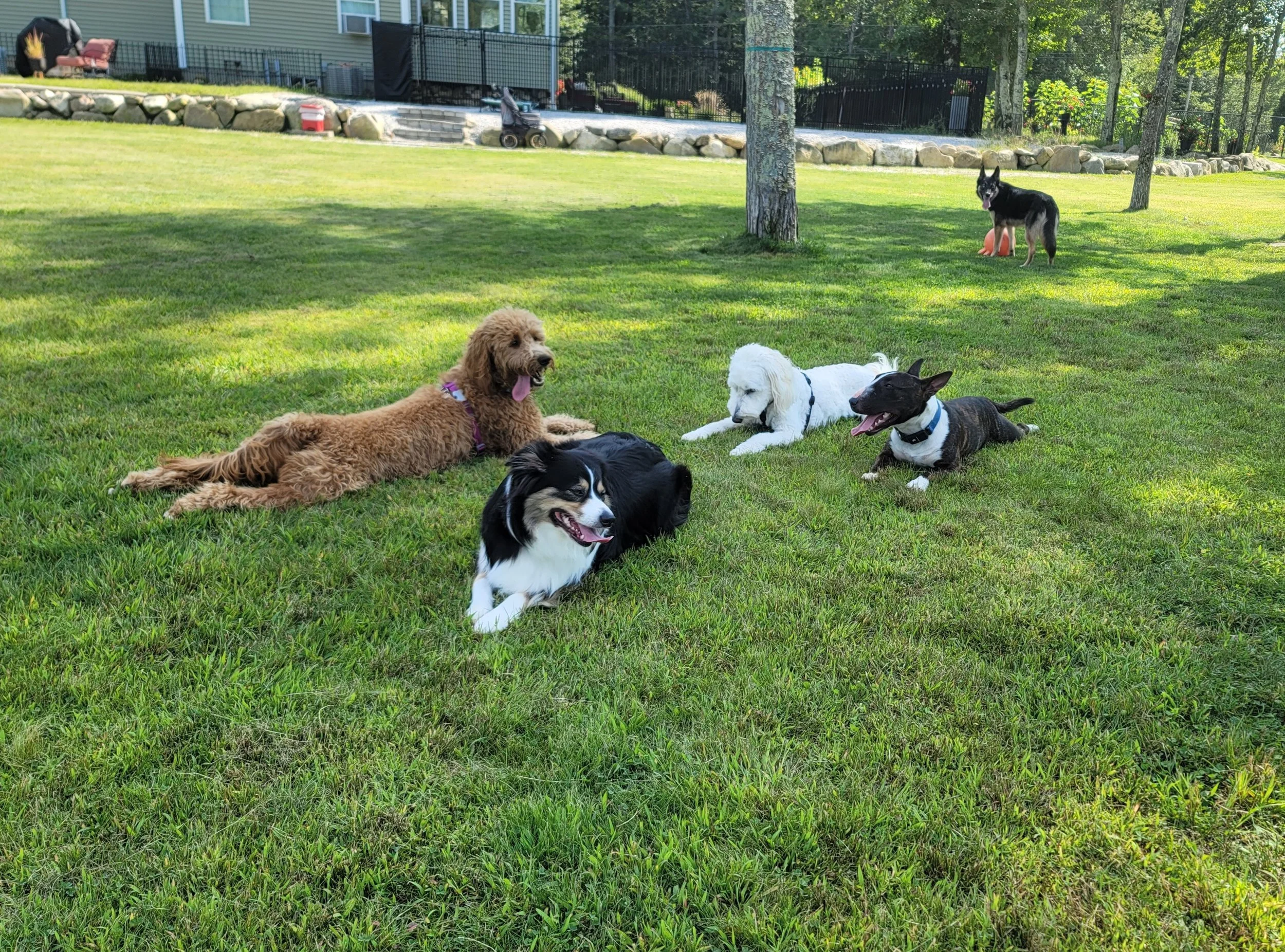
Other Effective Socialization Methods
If your dog has been excused from daycare or you are concerned they will not be a good fit, here are some other ways to safely socialize your dog:
Puppy classes: Puppy classes can provide a safe and controlled environment for puppies to socialize with other puppies and people. Not all puppy classes are run with safety and proper play in mind. Make sure you ask how puppy playtime is structured. A play-free puppy class can be excellent for teaching manners around other dogs.
Hire a dog walker. Please ask for recommendations
One-on-one playdates: If your dog is nervous around other dogs or if you're not sure how they will behave in a group environment, consider setting up one-on-one playdates with other dogs that you know are friendly and well-behaved.
Socialization play groups: small trainer-run groups that allow for play with lots of structure and training added in.
Walks in new environments: Taking your dog for walks in new environments can help them get used to different sights, sounds, and smells. This can help them become more comfortable in different situations.
Training classes: Training classes not only provide opportunities for socialization but also help your dog learn important skills and behaviors.
It's important to note that not all dogs are good candidates for dog daycare, and not all daycares are suitably set up for most dogs. Always consider your dog's individual needs and temperament when deciding on the best way to socialize them. If you're not sure what approach is best for your dog, consult with a professional dog trainer or behaviorist. Before enrolling your dog in daycare, it's important to evaluate their temperament and behavior and make sure that they are comfortable in a group setting with other dogs.
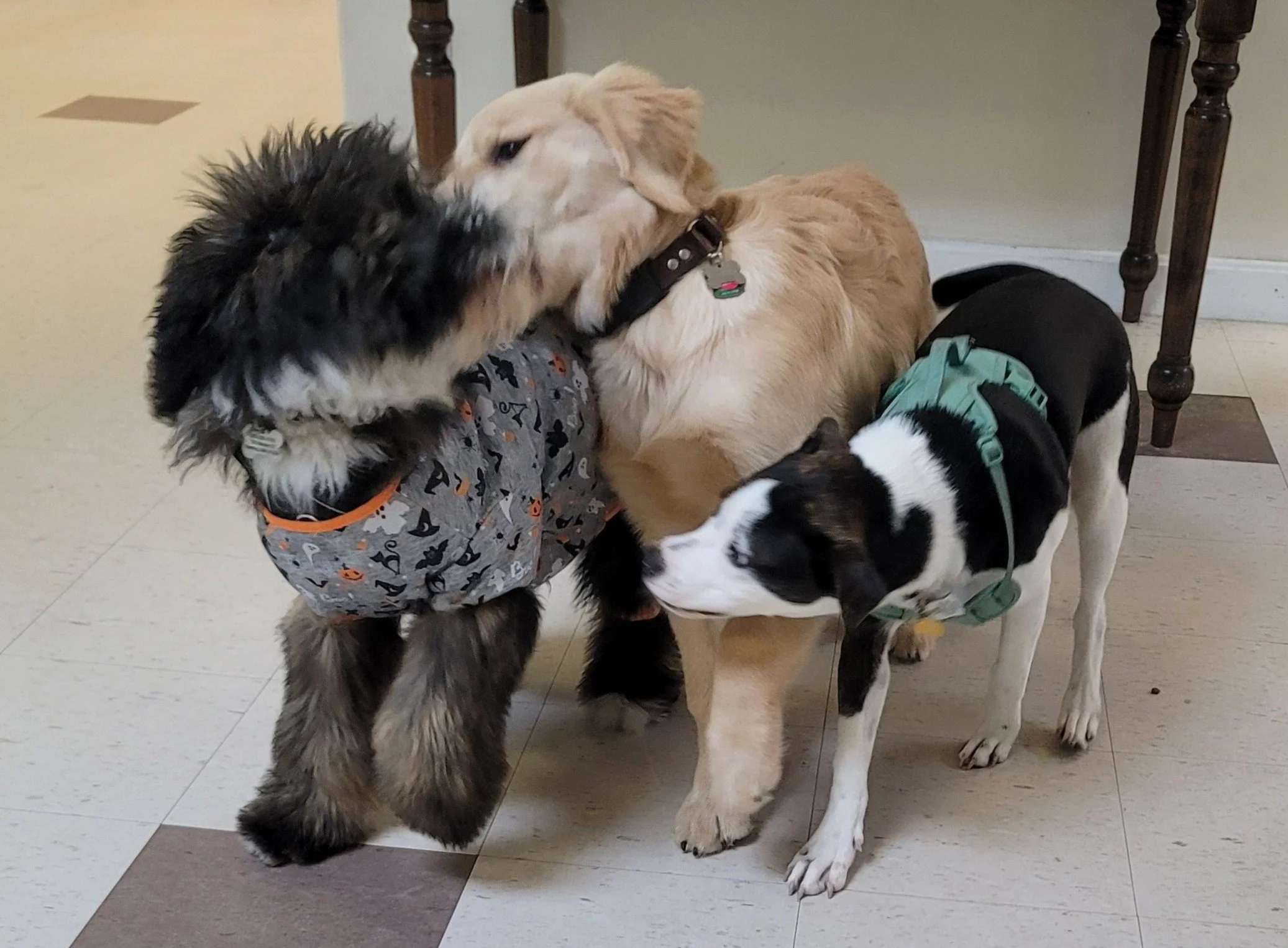
Puppies playing
The Blue Dingo Philosophy: When Structured Daycare Is a Great Option
We believe that socialization must be safe, intentional, and appropriate for the individual dog. We do not believe in traditional "daycare" as a universal solution. We strongly believe that a trainer led, highly structured daycare can be an excellent option, but only for dogs who are genuinely friendly to humans and other dogs, are physically healthy, and enjoy appropriate social play.
Structured daycare is not a free for all. It is also not hours at a time spent in a crate or a kennel. At well run daycare should operate with standard pillars that set them apart from the warehousing model:
Adequate Dog to Staff Ratios: Prioritize safety. Every group is supervised by certified professionals with ratios specifically designed to allow for active management, individual attention, and proactive intervention.
Constant supervision: The dogs should always be under direct supervision when not safely confined in a crate/ kennle with a meal or enruchemtn activity. Cameras should be placed in all common areas where dogs may be playing, resting, or spending time.
Truthful Report Cards: Thry tell you exactly what your dog's day was like, whether they were happy, anxious, overstimulated, or needed significant intervention. You always receive an honest assessment, not just "They had a great day!". There’s nothing worse than being told your dog is being removed from daycare for an on going problem you never knew they had.
Limited crate and kennel time: Dogs so need short breaks and a nap after meals to prevent bloat but there is no sense in sending a dog to daycare if they are spending the majority of the day in a crate. There are companies that offer day boarding which allows the dog a solo kennel with indoor and outdoor access. These make more sense for dogs who cant be left home but cant do daycare.
Mandatory Intake Forms and Trial Days: Success begins with a careful evaluation. Every owner should complete a comprehensive intake form and a required trial day to ensure they are a good fit for the specific environment and that the other dogs are a good fit for them.
Assigned Days: Consistency is critical. We applaud daycares utilizing assigned days for certain dogs, creating consistent, compatible groups that help the dogs feel safe and secure.
Proactive Dismissal Policy: To maintain a safe and emotionally healthy environment, we believe in removing a dog before they become a larger problem. If a dog’s behavior is deteriorating or they are causing constant stress within the group, it should be addressed immediately, which may include dismissing the dog from the program.
